
Quick answer
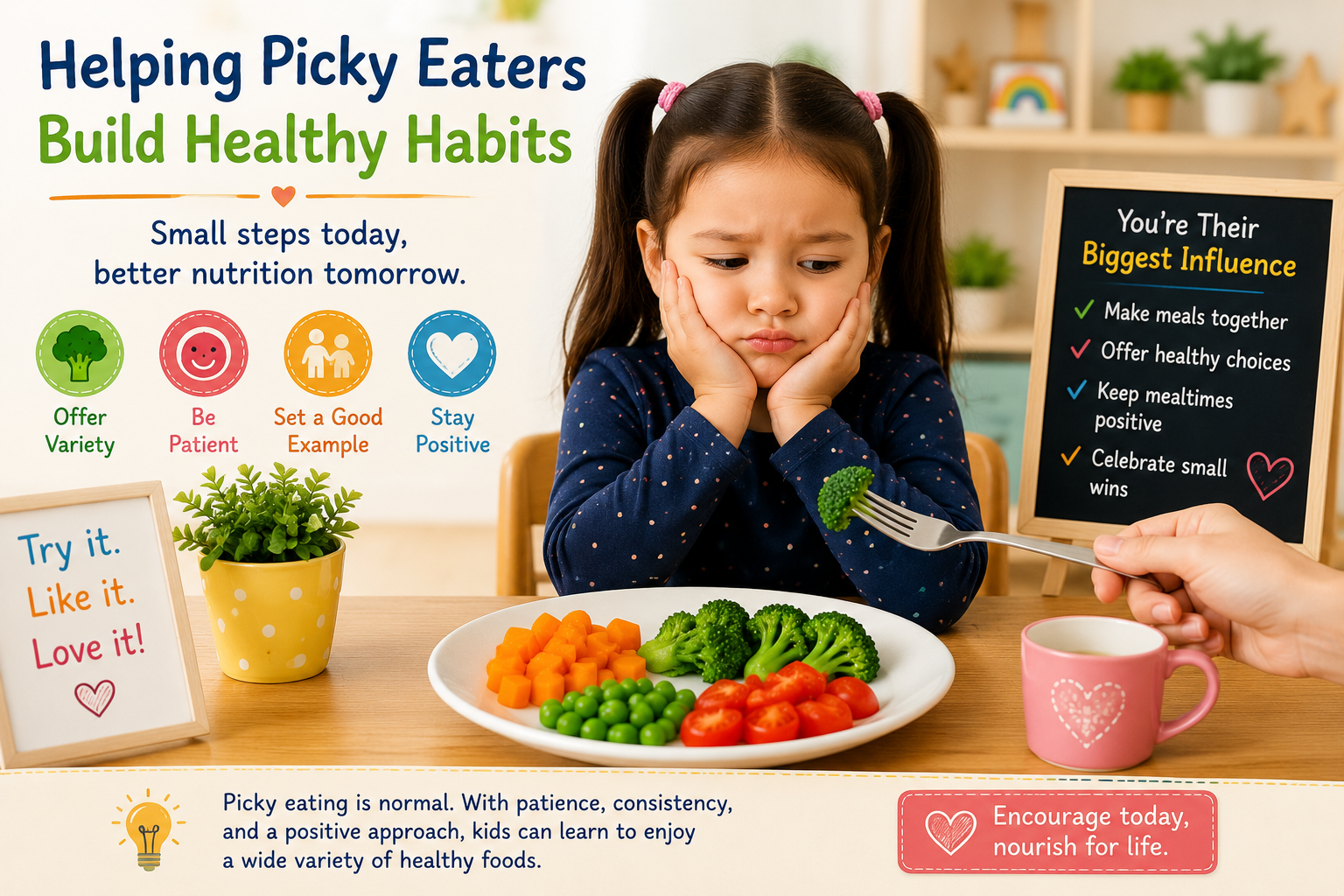
Picky eating in kids is often a normal part of development, especially during the toddler and preschool years. The most helpful approach is to serve regular meals and snacks, include at least one familiar food, offer tiny portions of new foods without pressure, and let the child decide whether and how much to eat. Progress may be gradual, and repeated calm exposure matters more than forcing a bite.
What is picky eating in kids?
Picky eating usually describes a child who accepts a limited range of foods, resists unfamiliar foods, prefers certain textures or brands, or eats differently from the rest of the family. Some children reject foods by color, smell, shape, temperature, or the way foods touch on the plate.
Children may also eat a food happily one week and refuse it the next. This inconsistency can be frustrating for adults, but it is common. Food preferences develop over time and are influenced by temperament, sensory sensitivity, appetite, routine, family habits, and previous experiences.
Picky eating is not a parenting failure
Many thoughtful, responsive parents have picky eaters. The goal is not to control every bite. The goal is to create regular opportunities for children to learn about food in a calm and supportive setting.
Why do kids become picky eaters?
Slower growth and changing appetite
After the rapid growth of infancy, appetite may become less predictable. A child may eat a large amount one day and very little the next.
Growing independence
Young children have limited control over their day. Saying “no” to food can be one way to express independence.
Caution around unfamiliar foods
Many young children become naturally cautious about unfamiliar foods. This may appear just as they become more mobile and independent.
Sensory preferences
Texture, smell, temperature, sound, color, and mixed foods can all affect comfort. A child who likes crisp foods may reject soft foods, while another may prefer smooth textures.
Pressure and negative experiences
Force-feeding, bargaining, choking scares, vomiting, pain, constipation, reflux, or allergic reactions can make eating feel unsafe or stressful.
What is normal, and what may need extra support?
| Often seen in typical picky eating | Reasons to discuss eating with a professional |
|---|---|
| Preferences change from week to week | The accepted food list keeps shrinking |
| The child eats at least some foods from several groups | The child eats very few foods or avoids whole food groups |
| Growth and energy appear steady | There are concerns about growth, weight, fatigue, or nutrient deficiency |
| New foods cause hesitation but not extreme fear | Meals cause panic, gagging, frequent vomiting, or severe distress |
| The child can chew and swallow age-appropriate textures | There are concerns about chewing, swallowing, coughing, or choking |
Strategies that reduce mealtime stress
Use a predictable meal and snack schedule
Regular eating opportunities help children arrive at meals with an appropriate level of hunger. Constant grazing can make it difficult for a child to feel ready to eat.
Include one familiar food
A familiar food gives the child something comfortable to eat while still allowing the family to serve a shared meal.
Keep portions small
A large serving of an unfamiliar food can feel overwhelming. Start with one pea, a thin slice, or a teaspoon. More can always be offered.
Let the child choose whether and how much to eat
Adults decide what, when, and where food is offered. Children decide whether to eat and how much to eat from what is available.
Keep conversation neutral
Instead of asking for bites, talk about the day, the food's color, or how it was prepared. Neutral language lowers pressure.
Helpful mealtime phrases
- “You do not have to eat it. It can stay on your plate.”
- “This carrot is crunchy. That one is softer.”
- “You can have more rice when you are ready.”
- “Your body can decide how much it needs.”
- “You can smell it or touch it if you are curious.”
How to introduce new foods to a picky eater
Learning to eat a new food can involve many steps. A child may first tolerate the food nearby, then touch it, smell it, lick it, taste it, and eventually eat a larger portion. Each step can be useful progress.
- Choose one new or less familiar food.
- Serve a tiny portion beside accepted foods.
- Avoid asking the child to taste it.
- Offer it again on another day in the same or a slightly different form.
- Let the child help wash, stir, peel, arrange, or serve the food.
- Model eating it without praising yourself or pressuring the child.
Use food bridges
A food bridge connects an accepted food to a similar new food. A child who likes plain crackers may try a different shape of cracker, then toast, then a toasted pita. A child who likes apples may explore pears because they share a crisp texture and mild sweetness.
| Accepted food | Possible bridge | Next gentle step |
|---|---|---|
| Plain pasta | Pasta with butter or olive oil | A tiny amount of grated cheese or sauce on the side |
| Chicken nuggets | Homemade breaded chicken strips | Small pieces of roasted chicken |
| Apple slices | Pear slices | Soft baked apple or pear |
| Yogurt | Yogurt with fruit blended in | Yogurt with small fruit pieces |
| Crackers | Toast strips | Pita wedges with hummus on the side |
Balanced meal ideas for picky eaters
Meals for picky eaters work best when they are simple, separated when needed, and built around at least one familiar food.
Breakfast ideas
- Toast, scrambled egg, and banana slices
- Oatmeal with berries served on the side
- Yogurt, dry cereal, and fruit
- Mini pancakes with nut or seed butter when safe
- Cheese toast with cucumber rounds
Lunch ideas
- Turkey or cheese roll-ups, crackers, and apple slices
- Plain pasta with peas and chicken served separately
- Hummus, pita wedges, cucumber, and fruit
- Bean-and-cheese quesadilla with avocado on the side
- Yogurt, whole-grain crackers, berries, and carrots
Dinner ideas
- Rice, chicken, and broccoli served in separate sections
- Tacos with fillings offered family-style
- Pasta with sauce on the side, meatballs, and fruit
- Baked potato with cheese, beans, and peas offered separately
- Fish, bread, and roasted vegetables
Deconstruct mixed meals
If soups, casseroles, or mixed bowls are difficult, serve the ingredients separately. The child can become familiar with each component before learning to enjoy the combined dish.
How to help picky eaters explore vegetables
Vegetables can be challenging because many are bitter, fibrous, or unfamiliar. Start with preparation methods that make them approachable.
- Offer raw and cooked versions to compare textures.
- Serve vegetables with a familiar dip.
- Roast vegetables to bring out sweetness.
- Let children choose a vegetable at the store.
- Use small tasting plates without requiring a taste.
- Pair vegetables with familiar grains, proteins, or sauces.
Hiding vegetables can add nutrition to a meal, but it should not be the only strategy. Children still benefit from seeing and learning about vegetables in recognizable forms.
Common mistakes to avoid
Forcing one more bite
Pressure may produce a bite in the moment but can increase resistance over time.
Using dessert as a reward
This can make dessert seem more valuable and the main food seem like a task.
Making a completely separate meal every night
This is exhausting and can narrow the child's food world. Instead, adapt the family meal and include one familiar option.
Talking about the child as “the picky one”
Labels can become part of a child's identity. Describe the current situation instead: “You are still learning about this food.”
Comparing siblings
Children have different appetites, sensory preferences, and learning timelines. Comparison usually adds pressure without solving the problem.
Picky eating at school and daycare
Packed meals should include enough familiar foods that the child can eat comfortably, plus an optional learning food in a very small amount. New foods are often easier to practice at home, where there is less time pressure.
Ask teachers or caregivers to avoid forcing bites or withholding other foods. Share relevant allergy, feeding, or sensory information. Reusable bento-style containers may help children who prefer foods to remain separate.
When to seek professional help
Talk with a pediatrician, registered dietitian, feeding therapist, occupational therapist, speech-language pathologist, or other qualified professional when:
- The child eats an extremely limited number of foods.
- The accepted food list continues to shrink.
- Growth, weight, energy, or nutrient intake is a concern.
- There is frequent gagging, choking, coughing, vomiting, or pain.
- The child cannot manage age-appropriate textures.
- Meals cause intense fear or family distress.
- Food allergies, digestive symptoms, or oral-motor concerns are suspected.
How stories can make food exploration more playful
Books can help children explore food without putting a real bite in front of them. Talk about colors, shapes, textures, and the foods characters might choose. A child can build a pretend rainbow plate, draw a new fruit, or invent a silly vegetable character.
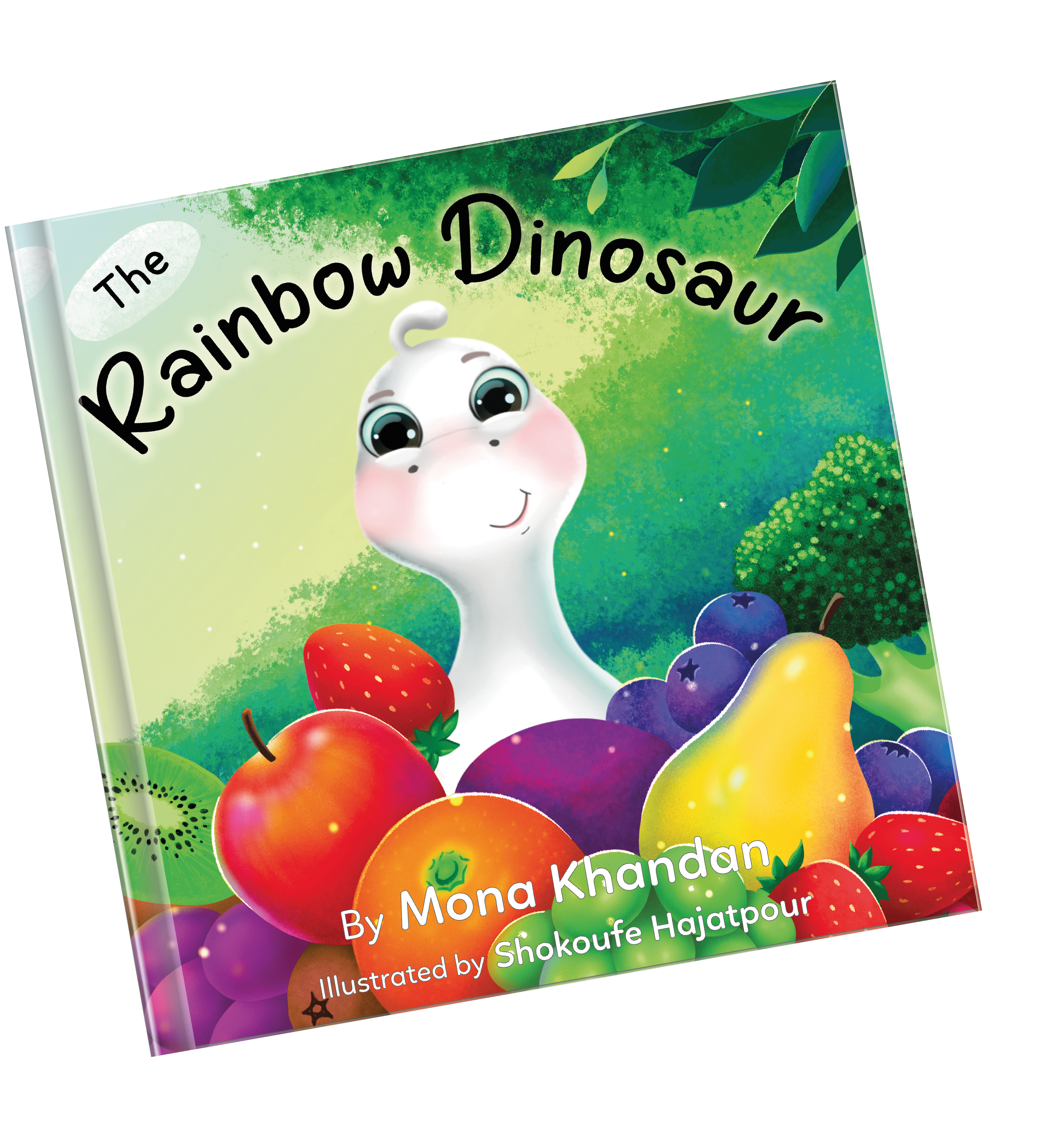
Meet The Rainbow Dinosaur
The Rainbow Dinosaur is a colorful picture-book adventure that introduces young readers to fruits, vegetables, trying new foods, and positive food choices through an imaginative dinosaur story.
Related articles
- Healthy Eating for Kids
- Healthy Foods for Kids
- Vegetables for Kids
- How to Get Kids to Eat Vegetables
- Balanced Diet for Kids
- Nutrition for Preschoolers
- Healthy Snacks for Kids
- Meal Planning for Kids
Frequently asked questions
Is picky eating normal in kids?
Yes. It is especially common during the toddler and preschool years. Many children become more cautious about new foods while also seeking more independence.
How can I help a picky eater try new foods?
Offer tiny portions beside familiar foods, avoid pressure, repeat exposure, involve the child in preparation, and allow exploration before tasting.
Should I make a separate meal for a picky eater?
Usually, one shared family meal with at least one familiar food is more practical. Components can be served separately when mixed dishes are difficult.
How many times should I offer a new food?
There is no exact number. Some children need many calm exposures before they feel comfortable. Focus on familiarity rather than counting bites or attempts.
When should I worry about picky eating?
Seek guidance when the diet is extremely limited, growth is affected, meals cause severe distress, or there are concerns about chewing, swallowing, allergies, pain, or nutrient deficiencies.
Trusted sources and further reading

About the author
Mona Khandan is the author of The Rainbow Dinosaur, a children’s picture book that uses colorful storytelling to introduce fruits, vegetables, and positive food choices. She creates educational content for parents, teachers, and young readers.