
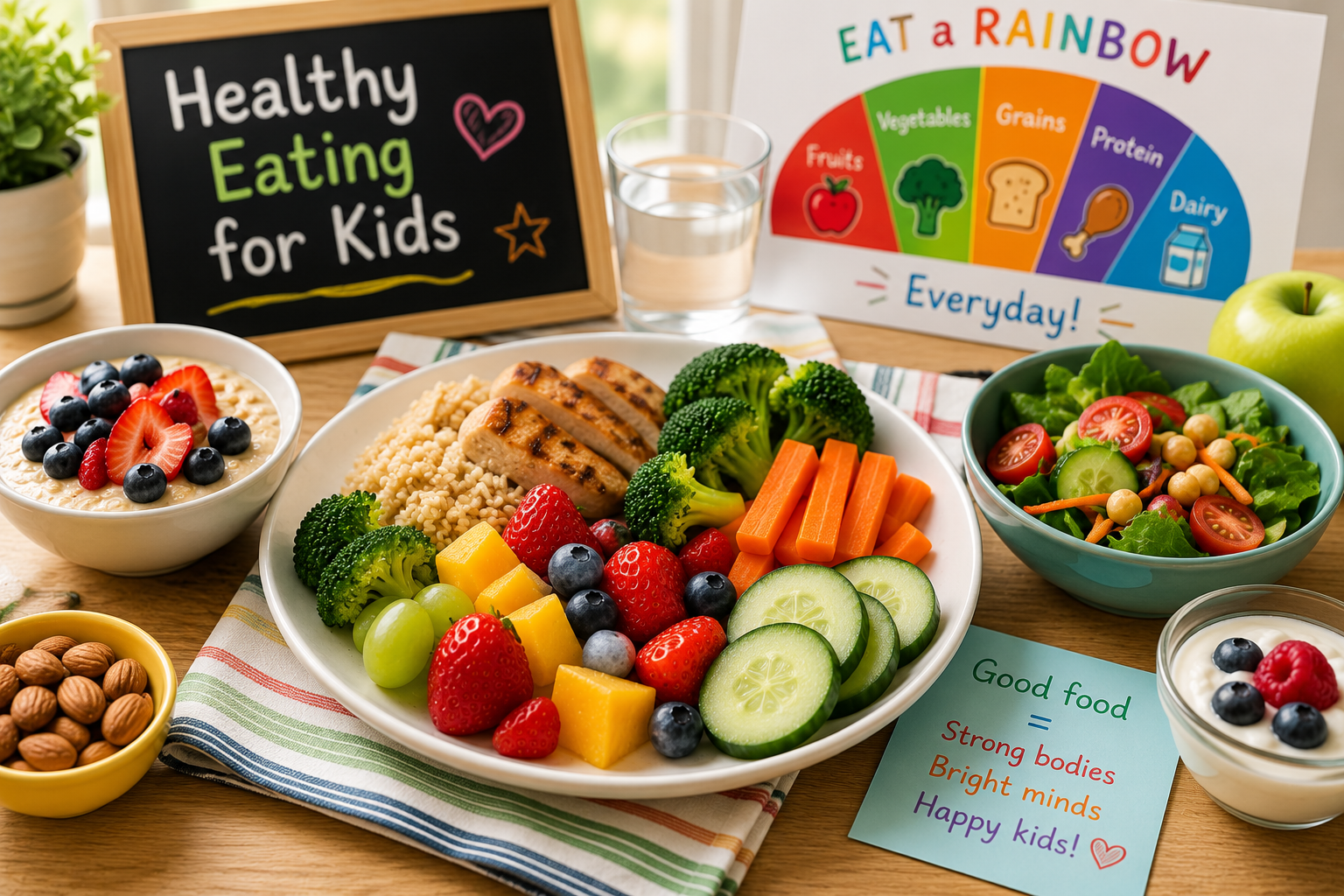
The quick answer
Healthy eating for kids means regularly offering a variety of nutrient-dense foods: vegetables, fruits, protein foods, whole grains, dairy or appropriate alternatives, and healthy fats. It also means limiting highly processed foods, sugary drinks, excess sodium, and added sugars while keeping mealtimes supportive rather than stressful.
What does healthy eating mean for kids?
Healthy eating is a pattern, not a single meal. Children do not need to eat every food group in exact proportions every time they sit down. What matters more is the overall variety and balance they receive across the day and week.
Public nutrition guidance emphasizes foods that provide useful nutrients for growth: vegetables, fruits, whole grains, protein foods, dairy without added sugars or suitable fortified alternatives, and healthy fats. Children also benefit when families limit highly processed foods, excess sodium, and added sugars.
A practical definition is:
Healthy eating for children means offering varied, age-appropriate foods and drinks that support growth, energy, learning, and development—while helping children build a comfortable, curious relationship with food.
This approach leaves room for culture, family traditions, budget, allergies, sensory needs, and personal preferences. A healthy pattern can look different from one family to another.
What should a balanced meal for a child include?
A simple meal can combine three or four elements rather than following a complicated formula. The goal is to offer enough variety that children can find something familiar while gradually learning about new foods.
| Food group | Kid-friendly examples | Why it helps |
|---|---|---|
| Vegetables and fruits | Carrots, peas, cucumber, tomatoes, berries, bananas, apples, oranges | Provide fiber, vitamins, minerals, color, flavor, and variety. |
| Protein foods | Eggs, beans, lentils, chicken, fish, tofu, yogurt, nuts or seeds when age-appropriate | Support growth and help make meals satisfying. |
| Whole grains or other nourishing starches | Oatmeal, brown rice, whole-grain bread, whole-grain pasta, potatoes, corn | Provide energy and, in many cases, fiber. |
| Dairy or fortified alternative | Plain milk, plain yogurt, cheese, or an appropriate unsweetened fortified alternative | Can provide calcium, vitamin D, protein, and other nutrients. |
| Healthy fats | Avocado, olive oil, nut or seed butter when safe, ground seeds | Support energy needs and help the body absorb certain vitamins. |
A useful rule: include one familiar food
When serving something new, include at least one food your child usually accepts. This does not guarantee the new food will be eaten, but it can make the meal feel safer and reduce pressure.
Why variety matters
Different foods provide different nutrients. Offering a variety of colors, textures, and food groups helps children encounter a broader range of nutrients and sensory experiences. A “rainbow” approach can make this idea easy for young children to understand: red tomatoes, orange carrots, yellow peppers, green peas, blueberries, and purple cabbage all bring something different to the table.
Fresh food is not the only healthy option. Frozen and canned fruits and vegetables can be nutritious, convenient, and budget-friendly. When possible, choose fruit without added sugar and vegetables with lower sodium or no salt added.
Seven habits that make healthy eating easier
1. Keep regular meal and snack times
A predictable rhythm helps children arrive at meals hungry but not overly hungry. Many families do well with three meals and planned snacks, adjusted for the child’s age, schedule, and medical needs.
2. Let adults decide what, when, and where
Parents and caregivers can choose which foods are offered, when meals happen, and where the family eats. Children can decide whether to eat and how much from what is available. This division can reduce bargaining and power struggles.
3. Model the behavior you want to encourage
Children learn by watching. When adults eat vegetables, drink water, talk positively about food, and try unfamiliar foods without drama, children see those behaviors as normal.
4. Use neutral food language
Try describing foods by color, crunch, temperature, smell, or where they grow. Avoid labeling children as “picky” in front of them and avoid turning food into a moral test. Phrases such as “You do not have to eat it, but it can stay on your plate” can keep the experience low-pressure.
5. Involve children in food preparation
Young children can rinse produce, tear lettuce, stir ingredients, choose between two vegetables, or place food on a serving plate. Participation creates familiarity, even when the child does not eat the food immediately.
6. Make water the everyday drink
Water is a simple default beverage. Plain milk or suitable unsweetened alternatives may also fit a child’s diet. Sugary drinks can add substantial amounts of added sugar without helping children feel full in the same way as whole foods.
7. Focus on progress, not perfection
A child who touches a new food, smells it, licks it, or places it on the plate is learning. Acceptance often develops gradually. Celebrate curiosity and participation instead of demanding a clean plate.
What about picky eating?
Selective eating is common during childhood, especially in the preschool years. Children may reject foods because they are unfamiliar, bitter, mixed together, too soft, too crunchy, or simply different from what they expected.
Helpful strategies include:
- Continue offering small portions of unfamiliar foods without pressure.
- Serve the new food beside something familiar.
- Allow children to explore food through cooking, gardening, stories, and play.
- Avoid using dessert as a reward for eating vegetables.
- Keep your reaction calm if the child says no.
- Try the same food in different forms, such as raw carrots, roasted carrots, or shredded carrots.
Some children have feeding challenges that go beyond ordinary picky eating. Speak with a pediatrician or qualified feeding professional if your child eats a very limited range of foods, has difficulty chewing or swallowing, regularly gags or chokes, loses weight, falls off their growth curve, or if mealtimes cause significant distress.
Simple healthy meal and snack ideas
These are flexible examples, not strict meal plans. Portions and textures should be appropriate for the child’s age and eating skills, and foods should be modified to reduce choking risk.
Breakfast ideas
- Oatmeal with banana and plain yogurt
- Whole-grain toast with egg and sliced fruit
- Plain yogurt with berries and low-sugar whole-grain cereal
- Scrambled egg, avocado, and whole-grain toast
Lunch and dinner ideas
- Chicken, brown rice, peas, and orange slices
- Bean and cheese quesadilla with tomatoes and avocado
- Whole-grain pasta with vegetables and a protein food
- Salmon or tofu, potatoes, cucumber, and berries
- Lentil soup with whole-grain bread and fruit
Snack ideas
- Apple slices with nut or seed butter when allergy-safe and age-appropriate
- Cucumber or soft-cooked vegetables with hummus
- Plain yogurt with fruit
- Cheese with pear slices
- Hard-boiled egg with whole-grain crackers
- Banana with a thin spread of peanut butter when safe
How stories can support healthy food conversations
Young children often learn well through stories, repetition, characters, and imaginative play. A book cannot make a child eat a particular food, but it can introduce vegetables and fruits in a friendly, non-threatening setting. Stories also give parents and teachers a natural way to ask open-ended questions such as:
- Which food would you like to explore?
- Can you find three colors on your plate?
- What do you think this food will feel like?
- Which fruit or vegetable would a dinosaur choose?
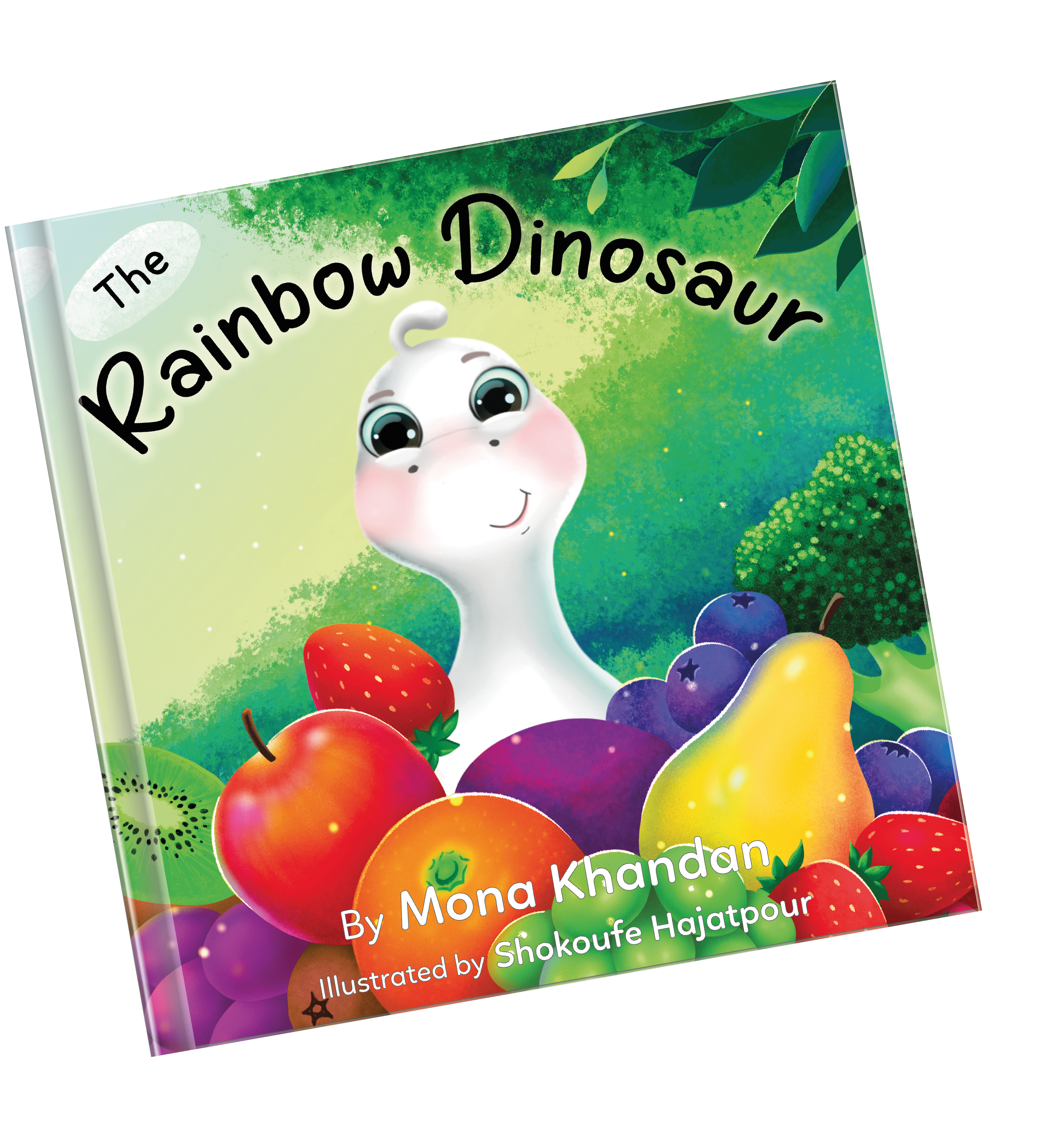
Meet The Rainbow Dinosaur
The Rainbow Dinosaur is a colorful picture-book adventure that introduces young readers to fruits, vegetables, trying new foods, and positive food choices through an imaginative dinosaur story.
Frequently asked questions
What does healthy eating mean for kids?
It means regularly offering a variety of nutrient-dense foods from the major food groups, serving age-appropriate portions and textures, and creating routines that help children develop a positive relationship with food.
How can I encourage my child to eat more vegetables?
Offer vegetables regularly in small portions, serve them beside familiar foods, let children help prepare them, and keep the experience pressure-free. Trying can include touching, smelling, or tasting; it does not have to mean finishing a serving.
Are frozen fruits and vegetables healthy?
Yes. Frozen produce can be a nutritious and convenient choice. Look for options without added sugars, heavy sauces, or excess sodium.
Should children clean their plates?
Requiring a clean plate can make it harder for children to notice their own hunger and fullness signals. A more supportive approach is to offer balanced choices and allow the child to decide how much to eat.
When should I ask a professional for help?
Contact your child’s healthcare professional if eating difficulties affect growth, hydration, nutrition, chewing, swallowing, or family well-being, or if the child has a very restricted diet or severe anxiety around food.
Trusted sources and further reading
This guide is educational and is informed by public nutrition resources. For personalized advice, consult your child’s pediatrician or a registered dietitian.

About the author
Mona Khandan is the author of The Rainbow Dinosaur, a children’s picture book that uses colorful storytelling to introduce fruits, vegetables, and positive food choices. She creates educational content for parents, teachers, and young readers.