
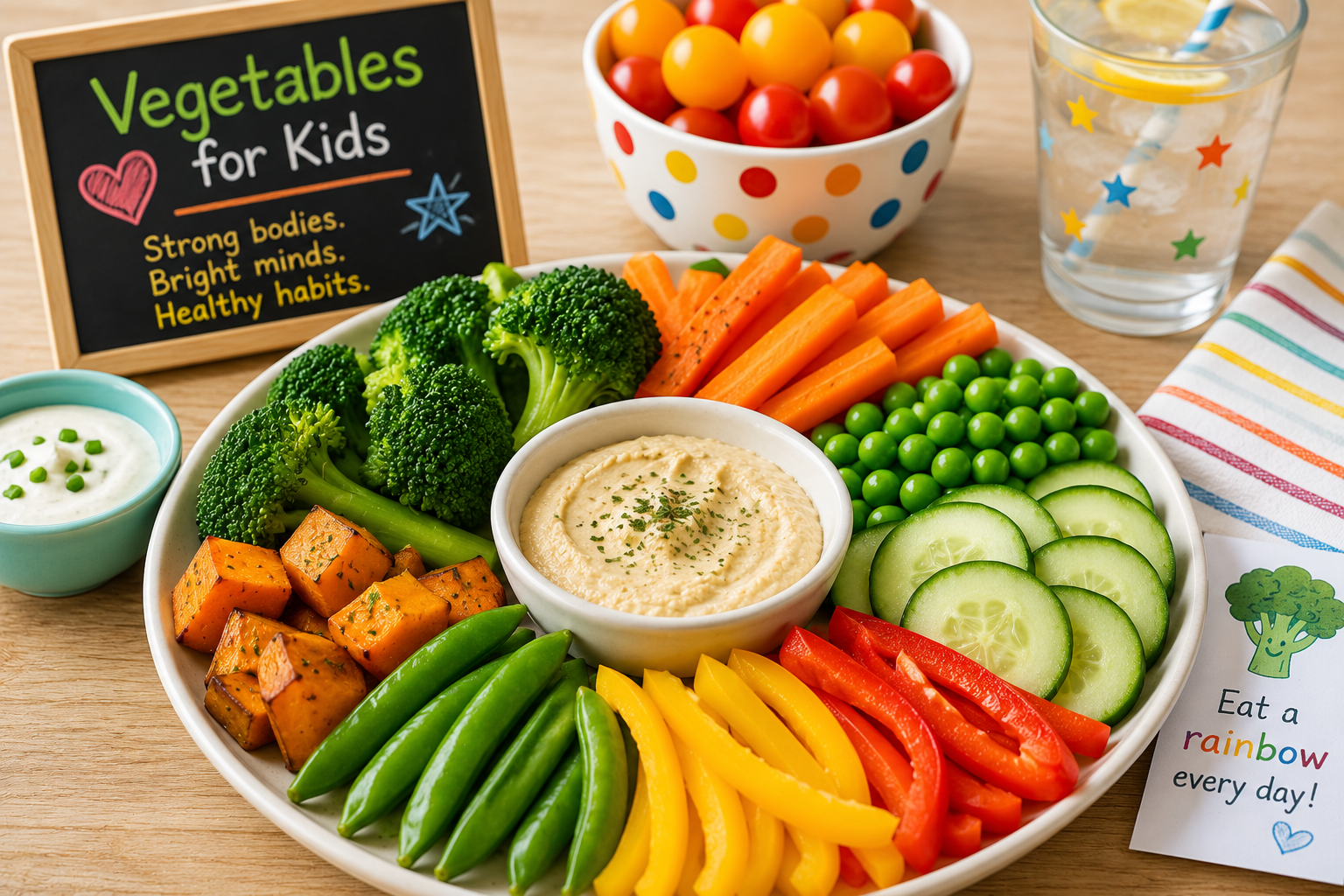
The quick answer
Healthy vegetables for kids include carrots, peas, sweet potatoes, broccoli, cucumbers, tomatoes, bell peppers, corn, green beans, zucchini, spinach, and cauliflower. Fresh, frozen, and canned vegetables can all fit. Serve small portions, prepare them safely, pair them with familiar foods, and avoid pressure or bargaining.
Why vegetables matter for kids
Vegetables can provide fiber, vitamins, minerals, water, color, flavor, and texture. Different vegetables offer different nutrients, so variety across the week matters more than expecting a child to eat the same vegetable every day.
Vegetables may be raw or cooked and can be fresh, frozen, canned, dried, mashed, blended, roasted, steamed, or added to soups and sauces.
Offer, do not pressure
Parents decide what, when, and where food is offered. Children can decide whether and how much to eat from what is available.
Healthy vegetables for kids to try
| Vegetable | Easy serving idea | Practical note |
|---|---|---|
| Carrots | Steamed sticks, grated, roasted, or mashed | Avoid hard raw chunks for young children. |
| Broccoli | Soft steamed florets, roasted pieces, or chopped into pasta | Try different levels of softness. |
| Sweet potato | Mashed, roasted wedges, baked cubes, or soup | Naturally sweet and easy to soften. |
| Peas | Mashed, stirred into rice, or served with pasta | Flatten when needed for safety. |
| Cucumber | Thin half-moons, peeled sticks, or with yogurt dip | Remove tough peel or seeds when needed. |
| Bell pepper | Thin strips, roasted pieces, or diced into eggs | Cooking softens the texture. |
| Tomato | Soft wedges, diced, sauce, or soup | Quarter cherry tomatoes lengthwise. |
| Green beans | Steamed until soft, chopped, or roasted | Remove tough ends and strings. |
| Zucchini | Roasted, grated into muffins, or added to pasta | Mild flavor when cooked. |
| Cauliflower | Roasted florets, mash, soup, or mixed with rice | Offer plain and seasoned versions. |
| Spinach | Chopped into eggs, pasta, soup, or smoothies | Cooked spinach is easier to manage than loose raw leaves. |
| Butternut squash | Roasted cubes, soup, mash, or pasta sauce | Soft, mild, and naturally sweet. |
Easy ways to serve vegetables to kids
At breakfast
- Add spinach, tomatoes, or peppers to scrambled eggs.
- Serve avocado on whole-grain toast.
- Mix pumpkin or grated zucchini into oatmeal or pancakes.
At lunch
- Add cucumber or soft pepper strips to a lunchbox.
- Spread hummus in a wrap with shredded carrot.
- Mix peas or corn into pasta salad.
At dinner
- Offer one familiar vegetable and one learning vegetable.
- Roast vegetables with olive oil and mild seasoning.
- Offer sauces or dips on the side.
Vegetable snack ideas for kids
- Soft cucumber slices with hummus.
- Steamed carrot sticks with yogurt dip.
- Avocado toast cut into strips.
- Roasted sweet potato cubes.
- Soft pepper strips with cream cheese.
- Tomato wedges with mozzarella.
- Soft broccoli florets with a mild dip.
Vegetables for picky eaters
Some vegetables are bitter, firm, stringy, wet, or unpredictable. A child may accept raw carrots but reject cooked carrots, or eat tomato sauce but not fresh tomato.
Start with tiny portions
One pea or one small piece can be enough for a learning exposure.
Pair vegetables with familiar foods
Serve them beside rice, pasta, bread, cheese, eggs, or another trusted food.
Change the preparation
Try roasting, steaming, grating, blending, mashing, or serving raw when safe.
Keep the mood neutral
Avoid pressure, bribes, punishment, or making dessert depend on eating vegetables.
Should vegetables be hidden in food?
Blending vegetables into sauces, soups, muffins, or smoothies can add variety. Children also benefit from seeing vegetables in recognizable forms so they can learn their names, appearance, flavor, and texture.
Fresh, frozen, or canned vegetables?
Fresh vegetables offer many textures and can be eaten raw or cooked.
Frozen vegetables are convenient, reduce waste, and can be quickly added to soups, rice, pasta, eggs, and casseroles.
Canned vegetables are shelf-stable and practical. Look for lower-sodium or no-salt-added options when available.
Vegetable safety for young children
- Cook firm vegetables until soft enough for the child’s skills.
- Avoid hard raw chunks of carrot, celery, and similar vegetables.
- Cut cherry and grape tomatoes lengthwise into quarters.
- Flatten peas, beans, or corn kernels when needed.
- Remove tough skins, strings, stems, and seeds.
- Have children sit upright and supervise them while eating.
- Wash produce under running water; do not use soap or detergent.
How stories can make vegetables more inviting
Stories can introduce vegetables through color, imagination, and play. Ask which vegetable looks like a tree, which one might give a dinosaur green spots, or how many colors appear on the plate.
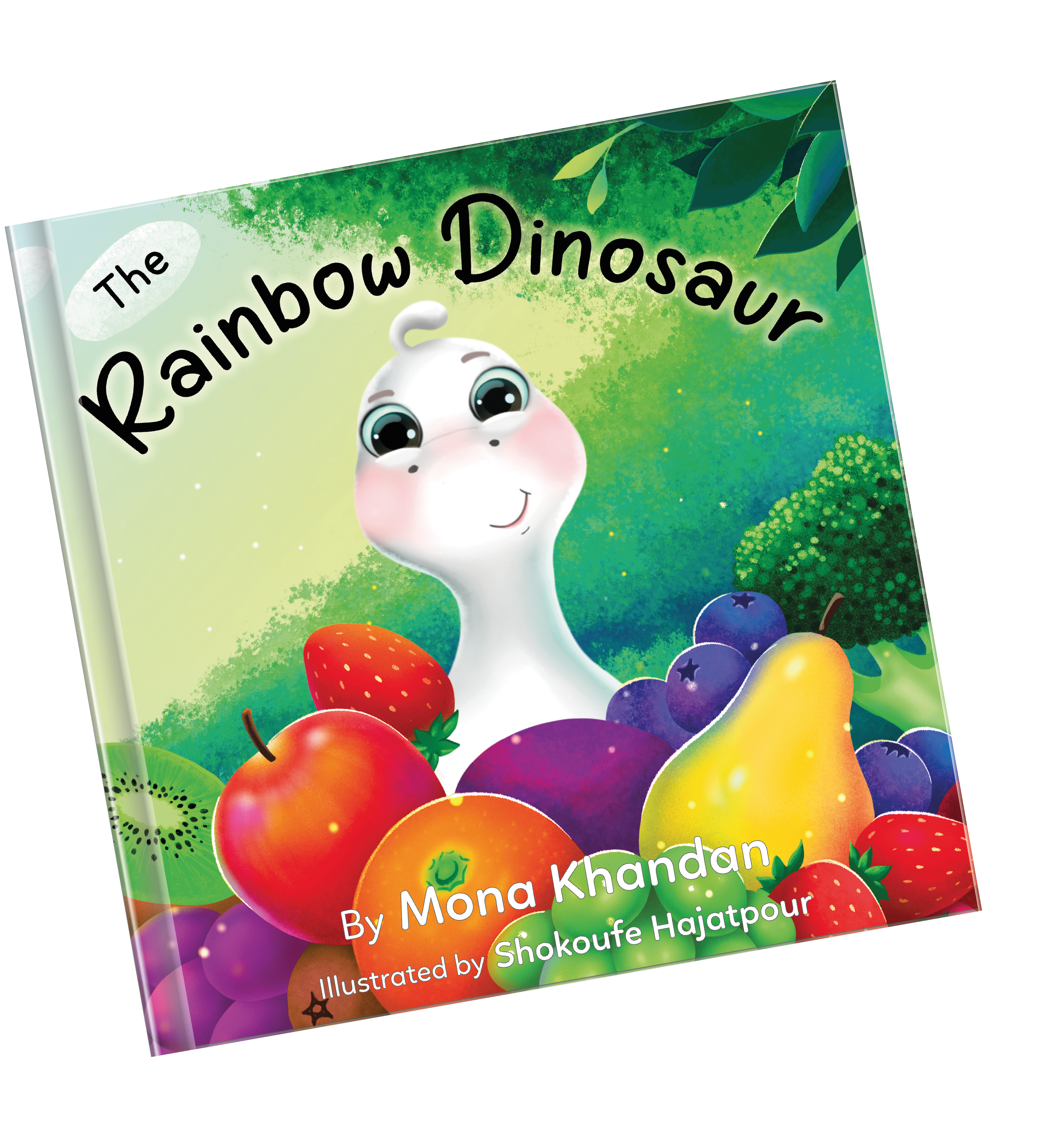
Meet The Rainbow Dinosaur
The Rainbow Dinosaur is a colorful picture-book adventure that introduces young readers to fruits, vegetables, trying new foods, and positive food choices through an imaginative dinosaur story.
Related healthy-eating guides
- Healthy Eating for Kids
- Healthy Snacks for Kids
- Healthy Lunch Ideas for Kids
- Healthy Breakfast Ideas for Kids
- Fruits for Kids
- Browse all articles
Frequently asked questions
What are some of the best vegetables for kids?
Good choices include carrots, peas, sweet potatoes, broccoli, cucumbers, tomatoes, bell peppers, corn, green beans, zucchini, spinach, and cauliflower.
How can I help a picky eater try vegetables?
Offer tiny portions without pressure, pair vegetables with familiar foods, vary the preparation, and let children participate.
Are frozen and canned vegetables healthy for kids?
Fresh, frozen, and canned vegetables can all fit. Choose options with little or no added salt when possible.
Should vegetables be hidden in children's food?
They can be blended into familiar dishes, but children should also see and explore vegetables in recognizable forms.
How should vegetables be prepared for toddlers?
Cook firm vegetables until soft, avoid hard raw chunks, cut round vegetables into safer shapes, and match the texture to the child’s skills.
Trusted sources and further reading

About the author
Mona Khandan is the author of The Rainbow Dinosaur, a children’s picture book that uses colorful storytelling to introduce fruits, vegetables, and positive food choices.